Seas

Great doubt and uncertainty surround the ultimate fate of Roberval's attempted colony, of which Cartier's expedition was to form the advance guard. Roberval, as already seen, had stayed behind in France when Cartier sailed in 1541, because his equipment was not yet ready for the voyage. Nor does he seem to have finally started on his expedition for nearly a year after the departure of Cartier. It has been suggested that Roberval did set sail at some time in the summer of 1541, and that he reached Cape Breton island and built a fort there.

Adapted from Baxter's 'Memoir of Jacques Cartier'

VOYAGE OF 1534

April 20 Monday Cartier leaves St Malo.

May 10 Sunday Arrives at Bonavista.

'' 21 Thursday Reaches Isle of Birds.

'' 24 Sunday Enters the harbour of Kirpon.

June 9 Tuesday Leaves Kirpon.

'' 10 Wednesday Enters the harbour of Brest.

'' 11 Thursday St Barnabas Day. Hears Mass and explorescoast in boats.

In the town hall of the seaport of St Malo there hangs a portrait of Jacques Cartier, the great sea-captain of that place, whose name is associated for all time with the proud title of 'Discoverer of Canada.' The picture is that of a bearded man in the prime of life, standing on the deck of a ship, his bent elbow resting upon the gunwale, his chin supported by his hand, while his eyes gaze outward upon the western ocean as if seeking to penetrate its mysteries.

It was on April 20, 1534, that Jacques Cartier sailed out of the port of St Malo on his first voyage in the service of Francis I. Before leaving their anchorage the commander, the sailing-masters, and the men took an oath, administered by Charles de Mouy, vice-admiral of France, that they would behave themselves truly and faithfully in the service of the Most Christian King. The company were borne in two ships, each of about sixty tons burden, and numbered in all sixty-one souls.

On June 25 Cartier turned his course away from Newfoundland and sailed westward into what appeared to be open sea. But it was not long before he came in sight of land again. About sixty miles from the Newfoundland shore and thirty miles east from the Magdalen Islands, two abrupt rocks rise side by side from the sea; through one of them the beating surf has bored a passage, so that to Cartier's eye, as his ships hove in sight of them, the rocks appeared as three.

The second voyage of Jacques Cartier, undertaken in the years 1535 and 1536, is the exploit on which his title to fame chiefly rests. In this voyage he discovered the river St Lawrence, visited the site of the present city of Quebec, and, ascending the river as far as Hochelaga, was enabled to view from the summit of Mount Royal the imposing panorama of plain and river and mountain which marks the junction of the St Lawrence and the Ottawa.

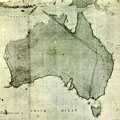
Flinders arrived in Sydney in the Francis about a fortnight after Bass returned in the whaleboat. It was, we may be certain, with delight that he heard from the lips of his friend the story of his adventurous voyage. The eye-sketch of the coastline traversed by Bass was, by the Governor's direction, used by him for the preparation of a chart to be sent to England.

The several representations concerning the case of Flinders that were made in France, the attention drawn to it in English newspapers, and the lively interest of learned men of both nations, produced a moving effect upon Napoleon's Government. Distinguished Frenchmen did not hesitate to speak plainly. Fleurieu, whose voice was attentively heard on all matters touching geography and discovery, declared publicly that "the indignities imposed upon Captain Flinders were without example in the nautical history of civilised nations.

From June, 1809, the British squadron in the Indian Ocean commenced to blockade Ile-de-France.* (* Flinders to Banks, Historical Records 7 202.) Decaen's fear of Flinders' knowledge is revealed in the fact that he ordered him not for the future to go beyond the lands attached to Madame D'Arifat's habitation. Flinders wrote complying, and henceforth declined invitations beyond the immediate neighbourhood of the plantation. He amused himself by teaching mathematics and the principles of navigation to the two younger sons of the family, and by the study of French literature.

Syndicate content